Creosote Buildup: What It Is and Why North Idaho Fireplaces Need Attention
If you burn wood in Post Falls, creosote is the single most important thing to understand about your chimney. It's invisible while it forms, it accumulates silently all heating season, and it's the fuel behind most chimney fires. Here's what it is, why our long winters make it worse, and what actually keeps it under control.
If you burn wood in Post Falls, creosote is the single most important thing to understand about your chimney. It's invisible while it forms, it accumulates silently all heating season, and it's the fuel behind most chimney fires. Here's what it is, why our long winters make it worse, and what actually keeps it under control.
What creosote actually is
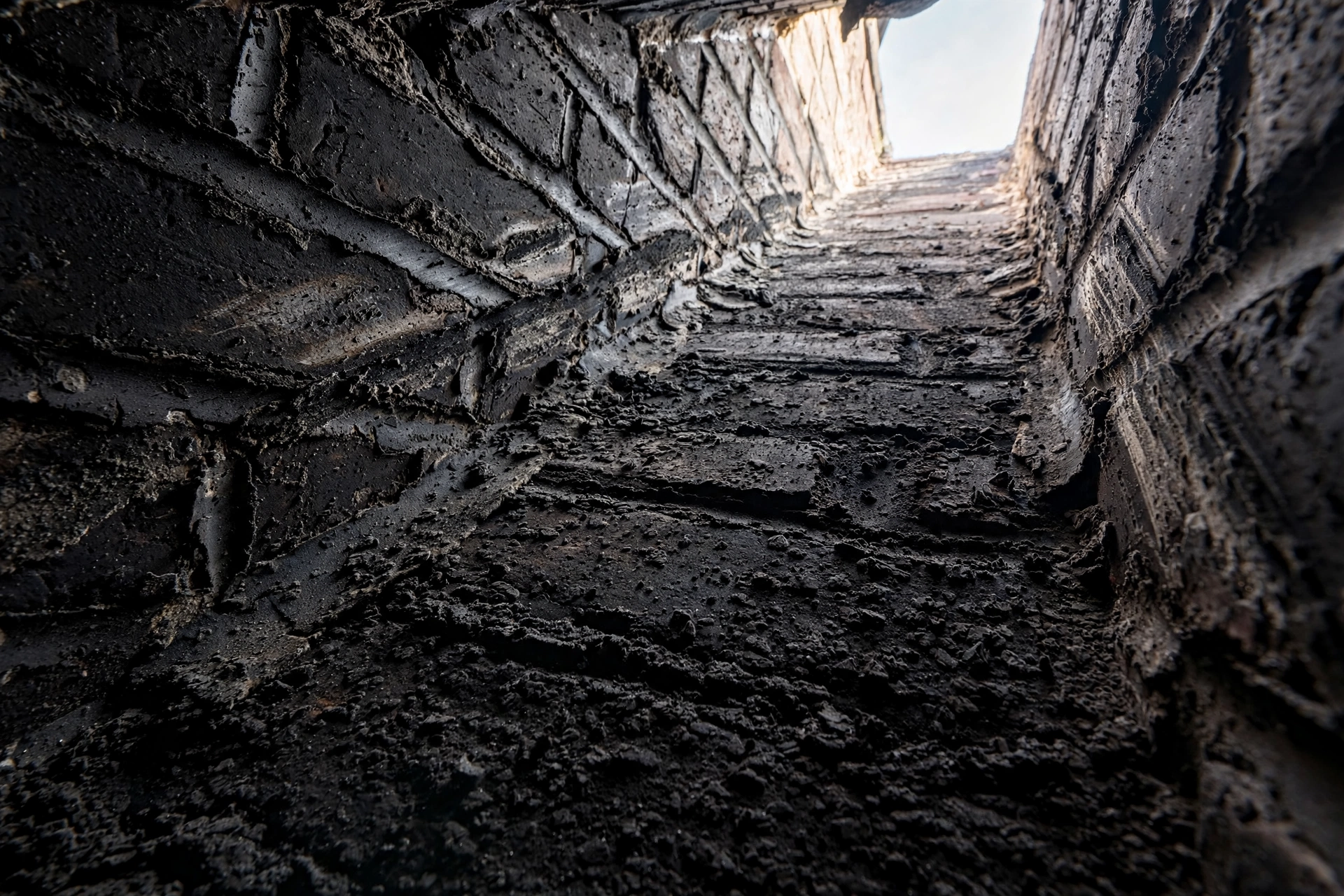
When wood burns, it doesn't burn completely. The unburned byproducts — tar vapors, moisture, and tiny particles — rise with the smoke. When those hot vapors hit the cooler walls of your chimney flue, they condense and stick. That sticky deposit is creosote.
At first it's a light, flaky soot you could brush off with a finger. Left alone through weeks and months of burning, it builds in layers and changes character — becoming crunchy, then tarry, then a hard glaze. The further it progresses, the harder it is to remove and the more dangerous it becomes.
Why North Idaho's heating season accelerates it
Post Falls heats roughly October through April — about six months. That's six months of burn hours, and creosote accumulation is essentially a function of burn hours multiplied by how completely the wood burns. A household that burns most evenings from October to April puts dramatically more hours on its chimney than the national average the "once a year is fine" advice was written for.
Two more local factors stack the deck:
- Cold flues condense more. Creosote forms when hot vapors meet cool flue walls. In a North Idaho winter, the upper reaches of a masonry chimney are cold, so condensation — and therefore deposits — happen faster, especially on the coldest nights when you're burning the most.
- Slow, smoldering fires make more of it. The instinct on a mild fall evening is to damp the stove or fireplace down to a slow smolder so the house doesn't overheat. Smoldering fires are cool, smoky, and incomplete — the perfect creosote factory. Hot, active fires produce a fraction of the deposits.
The practical upshot: if you burn wood regularly through a full North Idaho heating season, "once a year" sweeping is the minimum, not the ideal. Heavy users often need a mid-season check.
The stages, and why they matter
Chimney professionals describe creosote in three stages:
Stage 1 — Soot and flaky deposits. Light, dusty or flaky, easy to brush out. This is what a routine sweeping removes. Normal and expected.
Stage 2 — Crunchy, tarry flakes. Thicker, shinier, harder deposits that need more aggressive brushing — often with rotary cleaning tools. This is the "you waited a bit too long" stage.
Stage 3 — Glazed creosote. A hard, shiny, tar-like glaze baked onto the flue walls. Brushing won't remove it; it requires chemical treatment or specialized rotary tools, sometimes over multiple visits. Glazed creosote is also the most flammable form — it's essentially concentrated fuel lining your chimney.
The industry rule of thumb, from NFPA 211 (the national standard for chimneys and fireplaces): chimneys should be inspected at least once a year, and cleaned when creosote reaches 1/8 of an inch thick — or whenever glazed creosote is present, regardless of thickness. An inspection tells you which stage you're at; the thickness tells you whether it's time.
What actually prevents it
You can't eliminate creosote — it's inherent to burning wood. But you can dramatically slow it down:
- Burn dry, seasoned wood only. This is the big one. Properly seasoned firewood (dried 6–12 months, moisture content under 20%) burns hot and clean. Green or wet wood wastes its heat boiling off water, burns cool and smoky, and lays down creosote fast. If your wood hisses and steams in the fire, it's too wet.
- Burn hot fires. A hot, active fire with good airflow produces far less creosote than a damped-down smolder. It's better to burn a hot fire for a shorter time than a smoldering fire all evening.
- Don't starve the air supply. Closing the damper or air controls way down to "make the wood last" is the fastest route to glazed buildup. Keep enough air for lively flames.
- Warm the flue before the main fire. On the first cold start of the day — especially the first cold fire of the season — a cold flue drafts poorly and condenses heavily. Burning some newspaper or kindling first to warm the flue reduces that initial condensation surge.
- Never burn trash, cardboard in quantity, or treated lumber. They burn unpredictably, produce excessive deposits and toxic fumes, and treated wood releases harmful chemicals.
What sweeping actually does
A proper chimney sweeping isn't just brushing soot. A technician inspects the full length of the flue, measures creosote depth, removes deposits with brushes and rods sized to your flue, checks the cap, crown, and flashing from the top, and looks for structural issues — cracked tiles, gaps, or damage — while they're in there. For a wood-burning household, the annual sweep doubles as the annual inspection NFPA 211 calls for, which is efficient: one visit covers both.
If glazed (stage 3) creosote is found, expect a conversation about chemical treatment or a follow-up visit — it's genuinely harder to remove, and anyone who tells you a quick brush took care of heavy glaze is selling you something.
When to call FireFix
If you burn wood regularly and haven't had the chimney swept since last season — or ever — schedule it before the heavy burning starts. If you notice acrid smells, visible glaze, or smoke behaving differently than it used to, don't wait for fall. Our chimney sweep and inspection covers creosote removal, the full NFPA 211 annual inspection, and an honest read on what stage your buildup is at. Call +1 (208) 668-8111.
Fireplace trouble? Call FireFix.
Fireplace repair, inspection, and maintenance across Post Falls, Idaho — diagnosed properly, explained plainly, fixed right.