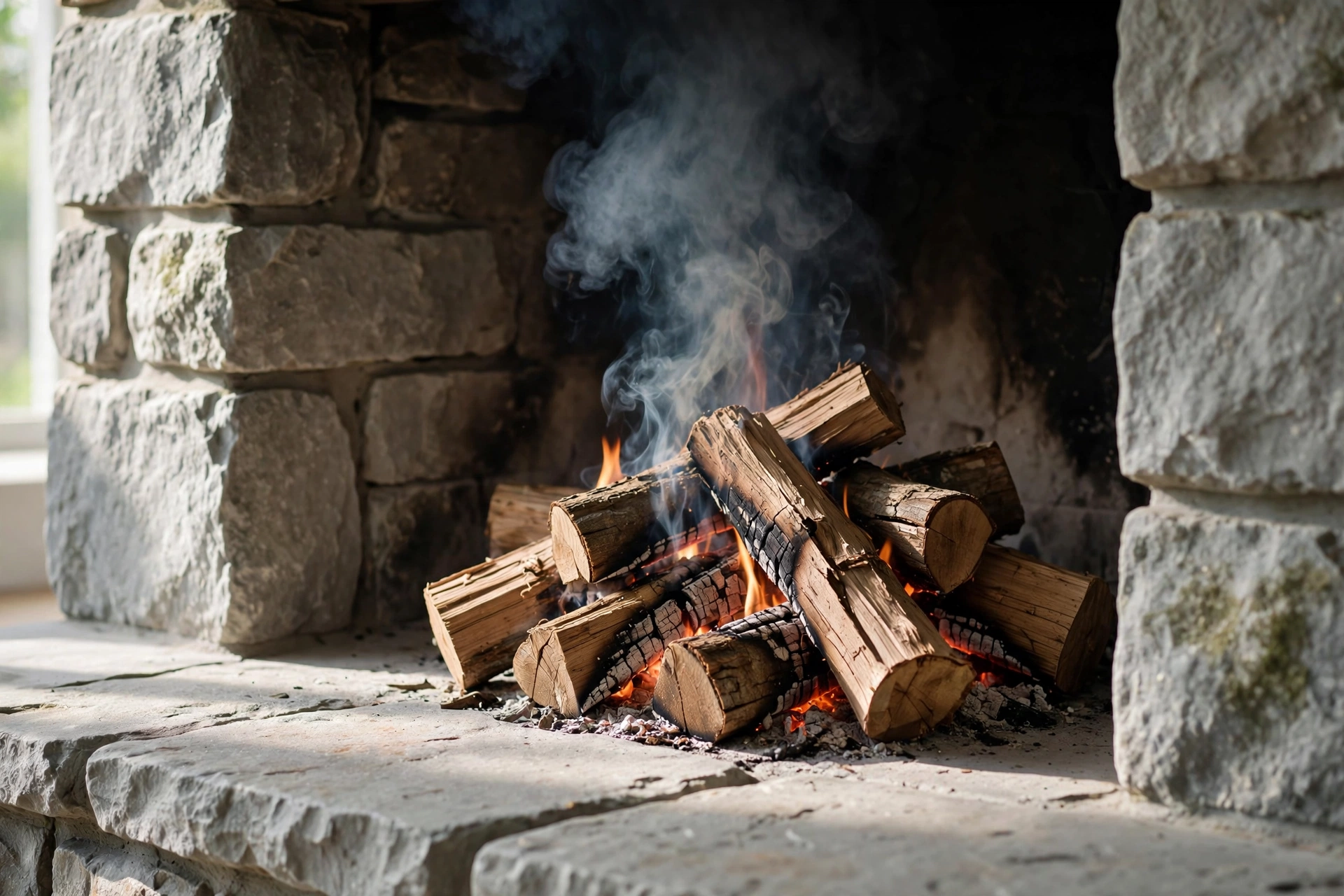
Why Your Fireplace Smells (and Which Smells Mean Stop)
The first fire of the season in Post Falls usually comes with a smell — and most of the time, it's nothing. But "most of the time" is doing a lot of work in that sentence, because a few fireplace smells are warning signs you should never ignore. Here's how to tell the difference between the harmless ones and the ones that mean stop, leave, and call someone.
The first fire of the season in Post Falls usually comes with a smell — and most of the time, it's nothing. But "most of the time" is doing a lot of work in that sentence, because a few fireplace smells are warning signs you should never ignore. Here's how to tell the difference between the harmless ones and the ones that mean stop, leave, and call someone.
The normal one: dust burn-off
If your fireplace sat unused all summer and smells a little hot, dusty, or "toasty" when you first fire it up in October, that's dust burning off the burner, logs, and heat exchanger. It's the fireplace equivalent of turning on your furnace for the first time in fall — the same smell, the same cause.
What it looks like:
- A faint dusty or slightly metallic hot smell
- Starts within minutes of first use
- Fades within an hour or two and doesn't come back on the next use
What to do: open a window for ventilation if you like, let it burn, and carry on. If the smell is gone by the second or third use, it was dust. This is the outcome in the large majority of "my fireplace smells in fall" cases.
The urgent one: gas smell
Natural gas has no odor on its own, so utilities add a chemical that smells like rotten eggs or sulfur. If you smell that around your fireplace — whether it's running or not — treat it as an emergency.
This is not a "wait and see" situation and it's not a DIY diagnosis. A gas odor can mean a leaking connection, a failing valve, or gas accumulating from a pilot that went out. The utility will locate the leak and make it safe; a fireplace technician can then repair the appliance itself.
Common confusion: a brief whiff of gas when a pilot is being relit is normal — you're intentionally flowing a little gas before ignition. A lingering rotten-egg smell, or one that appears while the fireplace is running normally, is not normal.
The wood-fireplace one: creosote and smoke smells
Wood-burning fireplaces have their own smell vocabulary, and it tells you about the condition of your chimney:
- A strong smoky or campfire smell in the house while burning usually means draft problems — a cold flue that hasn't warmed up, a blocked chimney cap, or negative air pressure from a kitchen range hood or bathroom fan pulling smoke back down the chimney. Some of this at startup on the first cold fire of the season is common; if it happens every fire, the draft needs attention.
- A sour, acrid, or "tar" smell even when you're not burning points to creosote buildup in the flue. Creosote is the tarry byproduct of wood smoke, and heavy deposits off-gas a distinctive sharp smell — especially on humid days or when the house is warm. If your chimney smells like an ashtray in July, it's telling you it needs sweeping.
- A musty, damp smell suggests water is getting into the chimney — a cracked crown, failed flashing, or missing cap letting rain in. Damp masonry and a damp flue also draft worse, so this one compounds.
Creosote deserves respect beyond the smell: it's the fuel for chimney fires. If your wood fireplace has a persistent acrid odor, schedule a chimney sweep and inspection rather than just airing out the room.
The downdraft one: wind-driven smells
Some fireplaces smell only on windy days. That's usually a downdraft — wind hitting the roofline pushes air (and flue odors, or even exhaust) back down the chimney into the house. Signs:
- The smell comes and goes with the weather
- You may also notice the pilot going out on windy days (gas units) or smoke puffing into the room at startup (wood units)
- It's worse with certain wind directions
Downdrafts are a venting problem: the chimney or vent termination may be too short relative to the roofline, the cap may be missing or wrong for the exposure, or nearby structures and trees may be creating turbulence. It's fixable, but it requires someone to look at the termination from the roof and assess the whole vent system.
The chemical one: new parts, paint, and finishes
If your fireplace was recently serviced, had new logs installed, or the room was recently painted, a chemical or "new" smell for the first few uses is expected. New ceramic logs, fresh gaskets, and touch-up paint all off-gas when first heated. It should fade within a few burn cycles. If a chemical smell appears without any recent work, don't ignore it — overheating components, melting wire insulation, or something foreign in the firebox can all produce chemical odors, and those need a look.
A quick smell decoder
- Dusty/hot, fades in an hour or two → dust burn-off. Normal.
- Rotten eggs/sulfur → gas leak. Leave the house, call the utility.
- Sour/acrid tar smell, even when idle → creosote buildup. Schedule a sweep.
- Smoke in the room while burning → draft problem. Needs diagnosis.
- Musty/damp → water intrusion. Check crown, cap, and flashing.
- Only on windy days → downdraft. Venting assessment needed.
- Chemical, after recent work → curing parts/finishes. Should fade.
- Chemical, out of nowhere → stop using it and get it inspected.
When to call FireFix
Call us for any persistent smell that isn't dust burn-off: ongoing smoke odors, sour creosote smells, wind-driven downdraft odors, or chemical smells with no recent work behind them. And remember the bright line — a gas smell means the utility first, from outside the house, and us after. For anything else on this list, +1 (208) 668-8111.
Fireplace trouble? Call FireFix.
Fireplace repair, inspection, and maintenance across Post Falls, Idaho — diagnosed properly, explained plainly, fixed right.