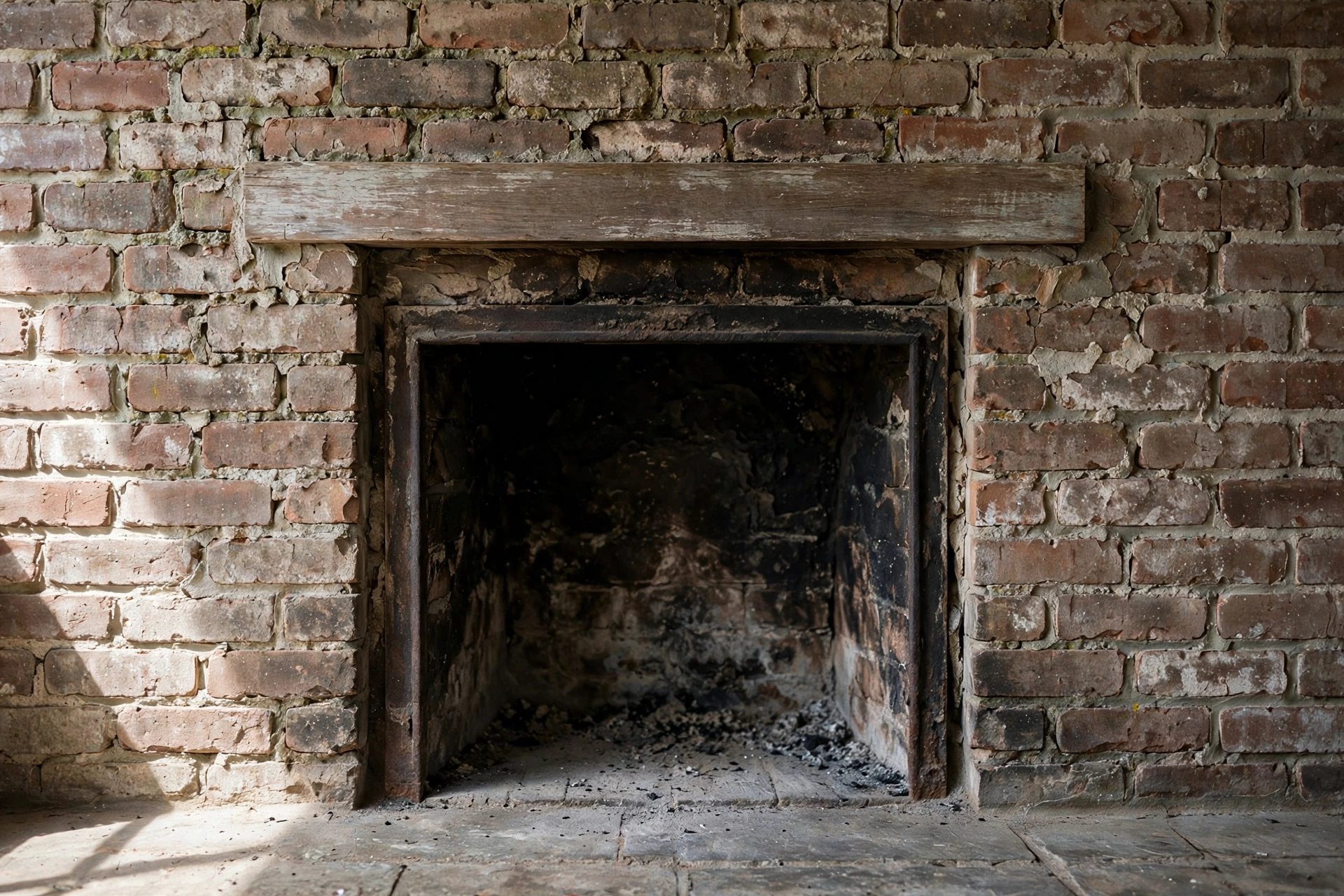
Repair or Replace? How to Decide What Your Old Fireplace Needs
Your fireplace is 20, 30, maybe 40 years old. It still "works" — mostly. But something's off: it doesn't heat like it used to, it needs frequent attention, or a technician just handed you a repair estimate that made you pause. The question underneath is always the same: keep fixing it, upgrade it, or start over?
Your fireplace is 20, 30, maybe 40 years old. It still "works" — mostly. But something's off: it doesn't heat like it used to, it needs frequent attention, or a technician just handed you a repair estimate that made you pause. The question underneath is always the same: keep fixing it, upgrade it, or start over?
There are three paths — repair, insert, or rebuild — and the right one depends on honest answers to a handful of questions.
Path 1: Repair what you have
Repair makes sense when the fireplace is fundamentally sound and the problem is a worn component or a maintenance backlog. Most gas fireplace repairs fall here: a failed thermocouple, a weak thermopile, a bad valve, tired gaskets, a dead remote receiver. These are parts with finite lifespans, and replacing them restores the unit to proper operation. A 15-year-old gas fireplace with a new thermopile and a cleaned burner isn't a compromised fireplace — it's a serviced one.
For wood-burning masonry fireplaces, repair covers damper replacement, firebox repointing, crown repair, cap replacement, and flashing fixes. These address specific failure points without touching the structure.
Repair is the right call when:
- The fireplace is structurally sound — no cracked firebox walls, no leaning chimney, no major masonry failure
- The problem is a specific failed part or a defined maintenance issue
- The unit meets your needs when it's working (heats enough, looks fine, you like the fuel type)
- The repair cost is modest relative to replacement
- The fireplace is less than ~20 years old (gas units) or the masonry is in good shape (wood units)
Repair is the wrong call when you're fixing the same system repeatedly, the firebox or flue liner is damaged, or the unit fundamentally can't do what you want (an open masonry fireplace will never be an efficient heater no matter how many dampers you replace).
Path 2: Install an insert
This is the option most homeowners don't know exists, and it's often the best value of the three. A fireplace insert is a self-contained, sealed heating unit — wood, pellet, or gas — that slides into your existing masonry fireplace opening and vents through the existing chimney (usually with a new stainless liner).
What an insert changes:
- Efficiency: An open masonry fireplace is roughly 10–15% efficient — most of its heat goes up the chimney. A modern insert runs 60–80%+ efficiency. Same chimney, radically different heat output.
- Control: Inserts offer air controls (wood), thermostats (gas/pellet), and blowers that actually push heat into the room.
- Safety: A sealed unit with a proper liner eliminates many of the draft, spark, and creosote-distribution problems of open fireplaces.
- Cost: An insert plus a liner typically costs far less than tearing out and rebuilding, while delivering most of the performance benefit.
An insert is the right call when:
- You have a masonry fireplace with a sound structure but poor performance
- You want real heat, not ambiance — the fireplace as a heating appliance
- The chimney needs a new liner anyway (the liner work overlaps — do it once)
- You like the location and look of the existing fireplace but not how it performs
- You're burning wood and want to cut creosote production and wood consumption
An insert is the wrong call when the masonry structure itself is failing, or when the fireplace opening can't accommodate the insert size your heating goals need.
Path 3: Rebuild or replace
Sometimes the structure is the problem. A chimney with extensive spalling, a cracked or separated flue liner, a firebox with compromised walls, or a prefabricated (factory-built) fireplace that's reached the end of its rated life — these aren't repair candidates. They're replacement candidates.
Prefabricated fireplaces deserve a specific mention: many Post Falls homes built from the 1980s through the 2000s have factory-built wood or gas fireplaces — metal fireboxes with metal chimneys, hidden behind a framed chase. These units have rated lifespans, and when the firebox panels warp, crack, or rust through, the fix is replacement of the unit, not patching. A technician can identify whether you have masonry or prefab — many homeowners don't know.
Rebuild/replace is the right call when the firebox walls are cracked through, the chimney is leaning or severely spalled, the flue liner is collapsed or missing sections, repair estimates approach a large fraction of replacement cost, or a prefab unit is past its rated life with firebox damage.
The questions that settle it
When you're torn, work through these in order. They're the same questions a good technician asks:
- Is the structure sound? Firebox walls, chimney plumb and solid, liner intact. If yes, you're choosing between repair and insert. If no, you're looking at rebuild.
- What do you want it to do? Ambiance a few times a month is a different appliance than daily winter heating. Don't buy heating performance you won't use, and don't keep repairing an ambiance fireplace while wishing it heated the house.
- How old is it, and what's already been replaced? A gas unit on its third valve and second control board is telling you something. One failed thermocouple in 15 years is telling you something else.
- What's the chimney's condition? The chimney often decides the question independently. A chimney that needs relining pairs naturally with an insert. A chimney that needs rebuilding may force the whole decision.
- Are you fixing a part or fighting a design? Parts wear out — that's repair. But if the fundamental design (open masonry fireplace, undersized flue, prefab unit past its life) is the problem, no part replacement fixes it. That's insert or rebuild.
- What does the next 10 years look like? Add up likely repairs over the next decade versus the one-time cost of the upgrade. A fireplace that keeps needing parts every other year is a different proposition than one that's been trouble-free for a decade and just needs a thermocouple.
A note on sentiment vs. structure
Older masonry fireplaces are often better built than what's around them — but nostalgia doesn't change a cracked flue liner. An honest inspection gives you facts, and facts make this decision easy. What you don't want is to spend real money repairing a fireplace that an inspection would have condemned, or to replace one that a single inexpensive part would have saved.
When to call FireFix
This decision starts with an inspection, not a guess. We inspect the firebox, flue, chimney structure, and (for gas) the full control system, then lay out the options honestly: what repair costs and how long it buys you, whether an insert fits and what it changes, and whether the structure warrants a rebuild conversation. The right answer is the one that matches your fireplace's condition and your goals. Call +1 (208) 668-8111.
Fireplace trouble? Call FireFix.
Fireplace repair, inspection, and maintenance across Post Falls, Idaho — diagnosed properly, explained plainly, fixed right.