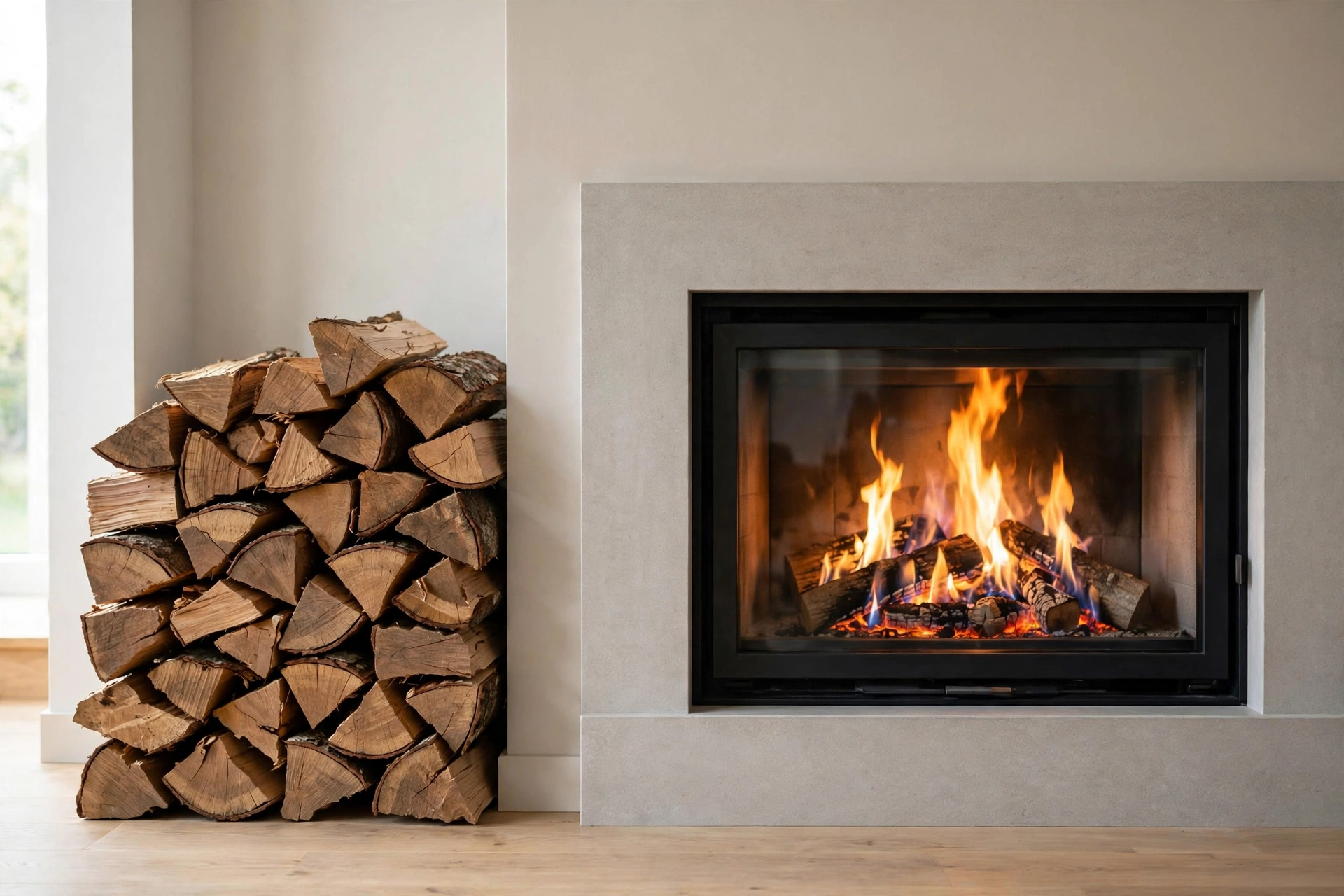
Wood vs. Gas Fireplace in North Idaho: An Honest Comparison
Walk through Post Falls City Center and you'll see original masonry wood-burning fireplaces in the older cottages and ranch homes. Walk through North Prairie's newer subdivisions and it's gas direct-vent units, almost exclusively. Both are rational choices — but for different households. Here's an honest breakdown for North Idaho conditions, without the sales pitch either side usually brings.
Walk through Post Falls City Center and you'll see original masonry wood-burning fireplaces in the older cottages and ranch homes. Walk through North Prairie's newer subdivisions and it's gas direct-vent units, almost exclusively. Both are rational choices — but for different households. Here's an honest breakdown for North Idaho conditions, without the sales pitch either side usually brings.
Heat: what each one actually does for the house
Wood is the stronger heater, full stop. A wood stove or a good wood-burning insert puts out serious BTUs and keeps radiating heat long after the fire dies down, thanks to thermal mass. In a power outage — and North Idaho gets winter storms that take the power out — a wood fireplace or stove keeps heating with zero electricity. That's a genuine resilience advantage in a six-month heating season.
Gas is the more consistent heater. A gas fireplace or insert delivers steady, thermostat-controlled output at the flip of a switch. It won't match a roaring wood fire's peak output, but it also won't swing between "too hot" and "fire's dying" the way wood does. For taking the chill off on shoulder-season evenings or supplementing a furnace, gas is the low-friction option.
One caveat: an open masonry wood fireplace (no insert, no doors) is actually a net heat loser — it sends more warm house air up the chimney than the fire radiates into the room. If your older home's wood fireplace feels decorative, that's why. A fireplace insert changes the math completely.
Effort: the part nobody romanticizes
This is where the comparison gets honest.
Wood demands labor, all winter, every winter. Cutting or buying, stacking, hauling, starting, tending, ash removal, and chimney sweeping. In a six-month heating season, that's not a hobby — it's a part-time job. Wood heat rewards people who genuinely enjoy the process. It punishes people who thought it would be "cozy" and discovered in February that hauling firewood in the dark at 20°F is not.
Gas demands almost nothing. Flip a switch or press a remote. Annual service once a year. Replace remote batteries. That's the whole maintenance program. For busy households, older homeowners, or anyone who wants heat without a second job, gas wins on effort by a mile.
Be honest with yourself about which camp you're in. The number of wood stoves that sit unused after two seasons because the owners underestimated the work is significant.
Cost of use: the factors, not the numbers
Nobody can give you a universal price comparison — it depends on your wood source, your gas rates, and how much you burn. But the factors are stable:
Wood costs hinge on sourcing. If you cut your own or have a cheap, reliable supplier, wood can be very economical heat. If you're buying premium cordwood delivered and stacked, the economics narrow. Factor in your time, chainsaw and equipment costs, and chimney sweeping — wood is never free heat, even when the wood itself is.
Gas costs hinge on usage patterns. Gas fireplaces sip fuel compared to a whole-house furnace, but a unit left running for ambiance six hours a night, five months straight, adds up. The pilot light question matters here too — a standing pilot burns a small amount of gas all season. Electronic ignition eliminates that entirely.
Maintenance costs differ in kind. Wood needs regular chimney sweeping (more often for heavy users in a long heating season — see our creosote guide), plus eventual masonry attention in our freeze-thaw climate. Gas needs an annual service visit — pilot assembly, thermopile check, burner cleaning, venting inspection — and occasional part replacement (thermocouples, remotes, valves wear out).
Cold-climate practicality
North Idaho specifics that should influence the choice:
- Power outages favor wood. Gas fireplaces with electronic ignition need electricity (though many have battery backups). Standing-pilot gas units work without power. Wood needs nothing at all. If outage resilience matters to you, this is wood's strongest card.
- Freeze-thaw favors gas venting. Masonry chimneys take a beating from our winters — water infiltration, spalling brick, crown cracks. Gas direct-vent units use a sealed metal vent through the wall with no masonry to maintain. Less to go wrong in February.
- Air quality and burn restrictions favor gas. Wood smoke is particulate pollution, and some winter inversion days bring burn restrictions. Gas burns clean regardless of weather.
- Draft problems hit wood harder. Cold flues, negative pressure from tight modern construction, and wind-driven downdrafts all affect wood fireplaces more than sealed gas units.
The hybrid answer many homes land on
A lot of North Idaho households don't actually choose — they run both. Gas for daily convenience, wood stove or insert for deep winter and outages. If your home already has a masonry fireplace, adding a gas log set or a gas insert gives you the push-button option while keeping the wood-burning capability. If it already has gas, a wood stove elsewhere in the house (where code and clearances allow) covers the resilience angle.
So which one?
- Choose wood if you want maximum heat, outage independence, have a good wood source, and genuinely don't mind the work.
- Choose gas if you want convenient, consistent supplemental heat with minimal effort and maintenance.
- Fix what you have first. Whichever type is already in your home, getting it serviced and running properly is almost always the right move before considering a conversion. A neglected wood fireplace with draft problems or a gas unit with a dying thermopile will sour you on the whole fuel type — unfairly.
When to call FireFix
Whether it's wood or gas, we service both — and that's genuinely useful when you're deciding, because we have no incentive to steer you toward one fuel. If your current fireplace isn't performing, get it diagnosed before you decide it's the wrong type. Often it's a repair, not a replacement, that stands between you and a fireplace you actually like. Call +1 (208) 668-8111.
Fireplace trouble? Call FireFix.
Fireplace repair, inspection, and maintenance across Post Falls, Idaho — diagnosed properly, explained plainly, fixed right.