Your Fall Fireplace Checklist: 8 Things to Do Before the First Cold Snap
In Post Falls, the heating season runs roughly October through April. Every year, the first cold snap in October triggers the same wave: dead pilots, weak thermopiles, dust-burn smells, and dead remote batteries — all of it discoverable weeks earlier. September is the ideal window: service companies aren't slammed yet, masonry repairs still have warm weather to cure, and you find problems on your schedule instead of the cold's.
In Post Falls, the heating season runs roughly October through April. Every year, the first cold snap in October triggers the same wave: dead pilots, weak thermopiles, dust-burn smells, and dead remote batteries — all of it discoverable weeks earlier. September is the ideal window: service companies aren't slammed yet, masonry repairs still have warm weather to cure, and you find problems on your schedule instead of the cold's.
Work through this checklist in September or early October and you'll head into winter with a fireplace you can trust.
1. Schedule the annual inspection
NFPA 211 — the national standard for chimneys, fireplaces, and vents — calls for an inspection at least once a year: checking for soundness, freedom from deposits, and correct clearances. For wood-burning units, the inspection pairs naturally with sweeping. For gas units, it's a full service: burner, pilot assembly, thermocouple/thermopile output, gas connections, venting, and glass seals.
Book it for September. By mid-October, every fireplace company in Kootenai County is working through the startup-failure backlog, and you'll wait longer for an appointment. An annual chimney inspection in September is the single highest-value item on this list.
2. Sweep the chimney (wood-burning homes)
If you burn wood, the chimney needs sweeping when creosote reaches 1/8 of an inch — and with North Idaho's six-month heating season, regular burners often hit that mark in a single winter. Fall sweeping clears the full season's accumulation before you start adding to it again. If you burned heavily last winter and skipped the spring sweep, this is non-negotiable.
While the sweep is there, they should check the cap, crown, and flashing from the roof — which leads to the next item.
3. Check the chimney exterior: crown, cap, and flashing
Fall is your last comfortable chance to catch water-entry problems before freeze-thaw season turns them into structural damage. From the ground with binoculars (or from the roof if you're comfortable and safe up there), look for:
- Cracked or crumbling crown — the concrete slab at the very top. Even hairline cracks let water into the masonry, where winter freezing widens them.
- Missing or damaged cap — the cap keeps rain, snow, and animals out of the flue. A rusted-out or missing cap is an open invitation to water damage and nesting.
- Failed flashing — the metal where the chimney meets the roof. Look for gaps, rust, or lifted edges.
- White staining (efflorescence) on the brick — mineral deposits that signal water is already moving through the masonry.
- Spalling — brick faces flaking or popping off. This is freeze-thaw damage in progress.
Masonry repairs need temperatures above roughly 40–50°F to cure properly. A crown repair done in September hardens before winter; the same repair done in December risks failing in the first freeze-thaw cycle. Timing matters as much as the repair itself. Our chimney and masonry repair page covers what each of these fixes involves.
4. Test-fire the gas fireplace
Don't wait for the first 30°F night to discover the pilot won't stay lit. In early October — or late September — run the full startup sequence:
- Light the pilot (or confirm electronic ignition fires)
- Turn on the main burner and let it run 15–20 minutes
- Confirm the flame looks normal: strong and blue at the pilot, even burner flames
- Test the wall switch and the remote
- Listen for anything unusual
That 20-minute test reveals weak thermopiles, lazy pilots, dead remote batteries, and dust burn-off smells while there's still time to fix them calmly. If the pilot won't stay lit, see our pilot troubleshooting guide — then call if cleaning doesn't resolve it.
5. Clean the glass and firebox
- Gas units: Clean the glass front with a cleaner made for fireplace glass (regular glass cleaner can leave residues that bake on). While you're at it, gently vacuum dust from around the burner and logs. Check that the logs are sitting in their proper positions — shifted logs cause sooting and lazy flames.
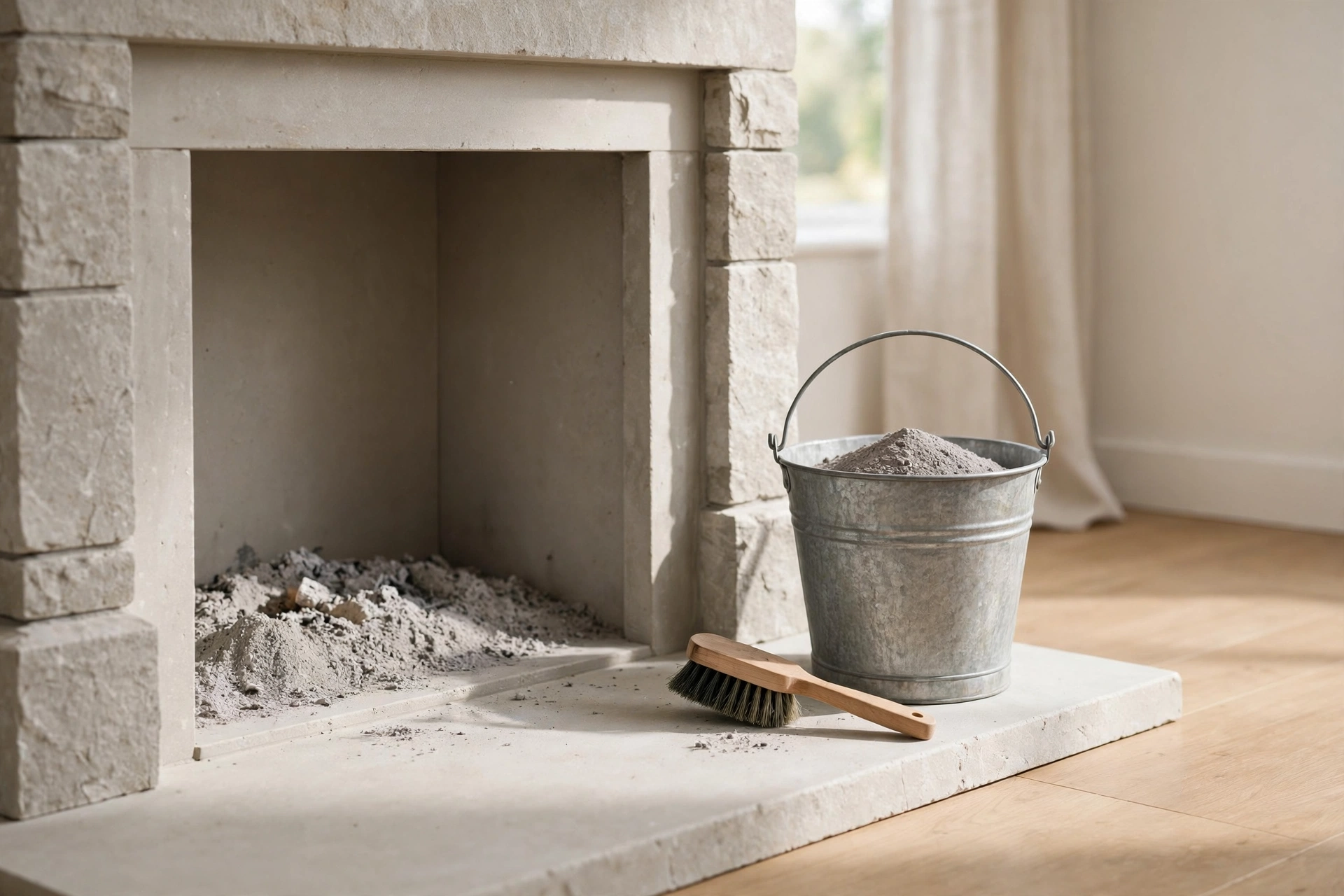
- Wood units: Shovel out excess ash (leave about an inch for insulation on the firebox floor). Check the damper: it should open fully, close fully, and seal reasonably when closed. A damper that won't close is an open hole in your house all winter.
6. Check smoke and CO detectors
This one isn't fireplace-specific, but it's fireplace-season-critical. Combustion appliances and long heating seasons make working detectors non-negotiable:
- Test every smoke detector and carbon monoxide detector in the house
- Replace batteries (or the whole unit if it's past its rated lifespan — most are 7–10 years)
- Confirm you have a CO detector on each level, especially near sleeping areas and near the fireplace itself
CO is odorless and colorless. A cracked heat exchanger, a blocked flue, or a downdraft pushing exhaust into the house won't announce itself any other way.
7. Stock and check your wood supply (wood burners)
- Quantity: Estimate what you burned last winter and add a margin. Running out in February means buying whatever's available — usually green, overpriced, or both.
- Seasoning: Wood for this winter should have been split and stacked since spring. Check it now: properly seasoned wood has cracked ends, loose bark, and a hollow sound when knocked together. If it's still heavy and the bark is tight, it's not ready.
- Storage: Keep the stack off the ground, top-covered, with airflow on the sides. Wood against the house invites pests; wood uncovered invites rain.
8. Clear the area and check clearances
Over the summer, the fireplace zone tends to accumulate things: stored boxes, furniture rearranged a little closer, decorations on the mantel. Before burning season:
- Restore proper clearances around the unit — combustibles (furniture, curtains, firewood stacks, decorations) kept at the distances your fireplace's manual specifies
- Check that combustion air vents aren't blocked
- For wood units, confirm you have a working fire extinguisher accessible near the fireplace, and that everyone in the house knows where the fireplace's gas shutoff is (for gas units)
The September advantage, summarized
- Inspection and sweeping: book before the October rush
- Masonry repairs: need 40–50°F+ to cure — September weather, not December
- Test-firing: finds pilot, thermopile, and remote problems while fixes are easy to schedule
- Wood: last chance to assess seasoning before you need it
When to call FireFix
If any item on this checklist turns up a problem — a pilot that won't hold, a cracked crown, a damper that won't close, a test-fire that doesn't look right — September is the time to get it handled, not November. We do fall tune-ups and pre-winter inspections across Post Falls, covering gas and wood units alike. Call +1 (208) 668-8111 and beat the cold-snap rush.
Fireplace trouble? Call FireFix.
Fireplace repair, inspection, and maintenance across Post Falls, Idaho — diagnosed properly, explained plainly, fixed right.